

Sleep changes after 50. It gets lighter, it breaks more easily, and the things that never used to matter, like a slightly warm room or a bedside lamp that's a bit too bright, start to make a real difference.
Most bedroom design advice ignores this completely. It's aimed at people in their twenties and thirties who can fall asleep on a sofa and wake up fine. For anyone over 50, the bedroom itself becomes a much bigger part of the equation.
Mattress Height and Getting In and Out of Bed
A mattress that's too low means dropping down onto it and pushing up from it every night and morning, which puts strain on knees, hips and lower backs. Too high and there's a risk of sliding off the edge or struggling to plant both feet on the floor when getting up in the dark.
The top of the mattress should sit roughly level with the back of the knee when standing next to the bed. For most people over 50, that's a total bed-and-mattress height of around 55 to 65 cm. Divan bases tend to hit this range naturally, while low-profile bed frames often fall short.
Lighting That Doesn't Blind at 3am
Waking during the night becomes more common with age. A bright overhead light or bedside lamp that floods the room will suppress melatonin production and make it harder to fall back asleep.
The fix is layered lighting. A dim, warm-toned nightlight near the floor will illuminate the path to the bathroom without waking the brain up fully. Bedside lamps should have adjustable brightness or a low-wattage warm bulb, and anything above 3000K colour temperature is too cool and stimulating for nighttime use.
Flooring and Fall Risk
Falls at night are a serious concern. The NHS estimates that around a third of adults over 65 will have at least one fall per year, and bedrooms with loose rugs, slippery floorboards or high carpet pile are common culprits. The simplest change is removing loose rugs entirely, or securing them with non-slip underlay. Low-pile carpet or cork flooring gives grip without creating a trip hazard, and both feel warm underfoot.
Furniture layout matters too. There should be a clear, unobstructed path from the bed to the door and to the bathroom. Bedside tables, chairs and storage units need to be pushed back far enough that there's no risk of clipping a corner in low light.
Temperature: The 20 to 25°C Window
A study published in Science of The Total Environment tracked nearly 11,000 nights of sleep data from older adults using wearable monitors and bedroom sensors. The researchers, based at Harvard Medical School's Marcus Institute for Aging Research, found that sleep was most efficient when the bedroom temperature was between 20 and 25°C. Above 25°C, sleep efficiency dropped by a clinically significant 5 to 10%.
That range is warmer than the 16 to 18°C often recommended for younger adults, which is good to know. A programmable thermostat that holds the bedroom at 21 or 22°C overnight is a good starting point. For rooms that tend to overheat in summer, a fan with a timer or a window left on a secure latch will help. The key is consistency. Large temperature swings during the night are more disruptive than a room that's slightly warm but stable.
Bedding Materials and Ventilation
Natural fibres like cotton, linen and bamboo wick moisture away from the body more effectively than synthetic alternatives. A medium-weight duvet in a natural fill can work year-round for most people, though having a lighter option for summer is sensible.
A bedroom that's sealed shut all night will build up moisture and CO2, both of which reduce sleep quality. Even a small gap in the window, or a trickle vent left open, makes a difference. Mechanical ventilation systems, which are standard in modern builds, handle this automatically
Blackout Curtains or Blinds?
Lighter sleep means more sensitivity to early morning light, especially in summer when dawn arrives before 5am. Blinds sit closer to the glass and leave fewer gaps at the edges, making them slightly better at blocking light from street lamps. Curtains offer better insulation and noise reduction. In rooms with large or awkwardly shaped windows, a combination of both often works best.
What Lessons Can We Take Away From Modern Park Homes?
Many of these problems are baked into older two-storey houses. Bedrooms upstairs mean stairs at night. Corridors are narrow. Windows are draughty. Radiators sit under windows where they're least efficient, and the room layout was designed around furniture that went out of production thirty years ago.
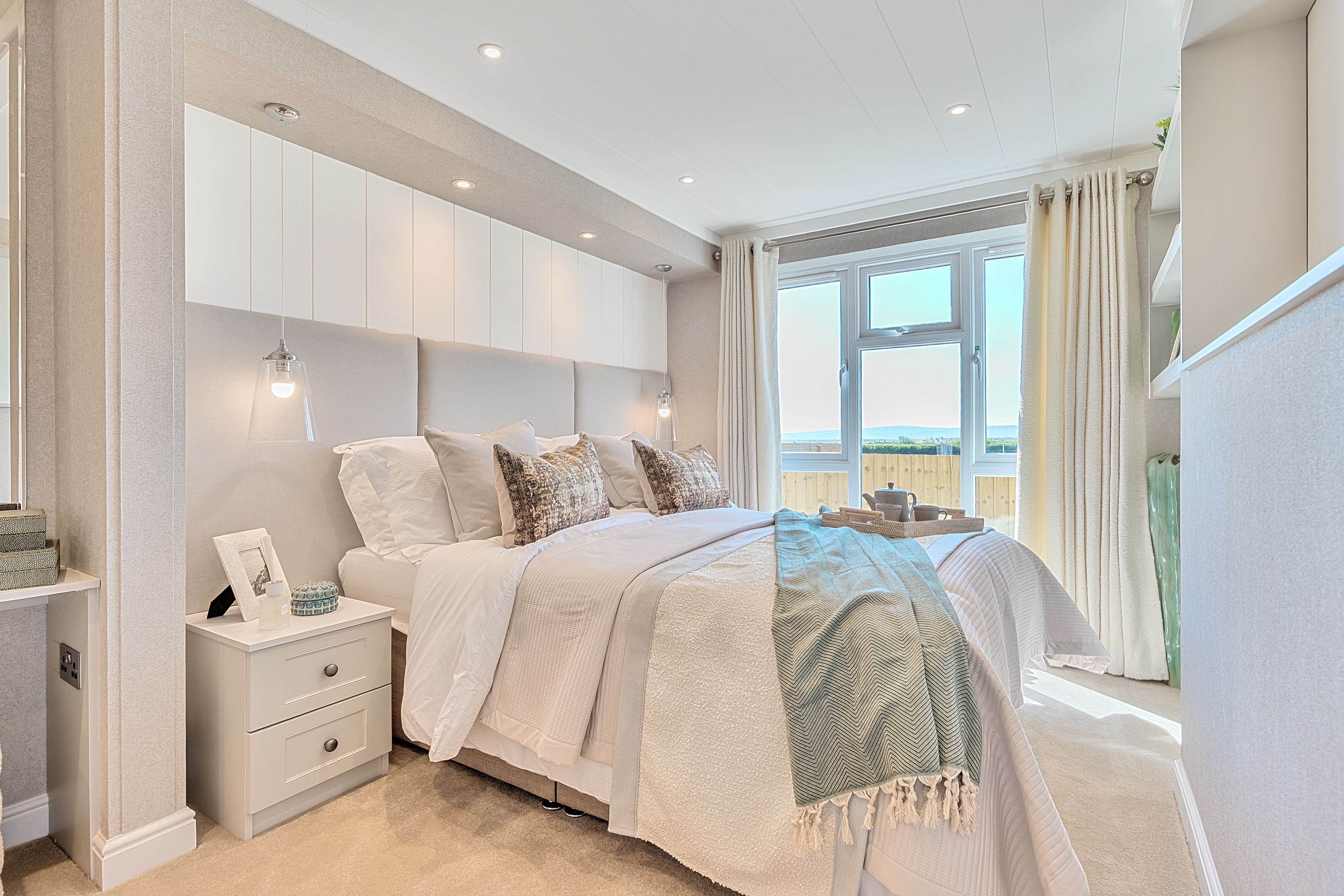
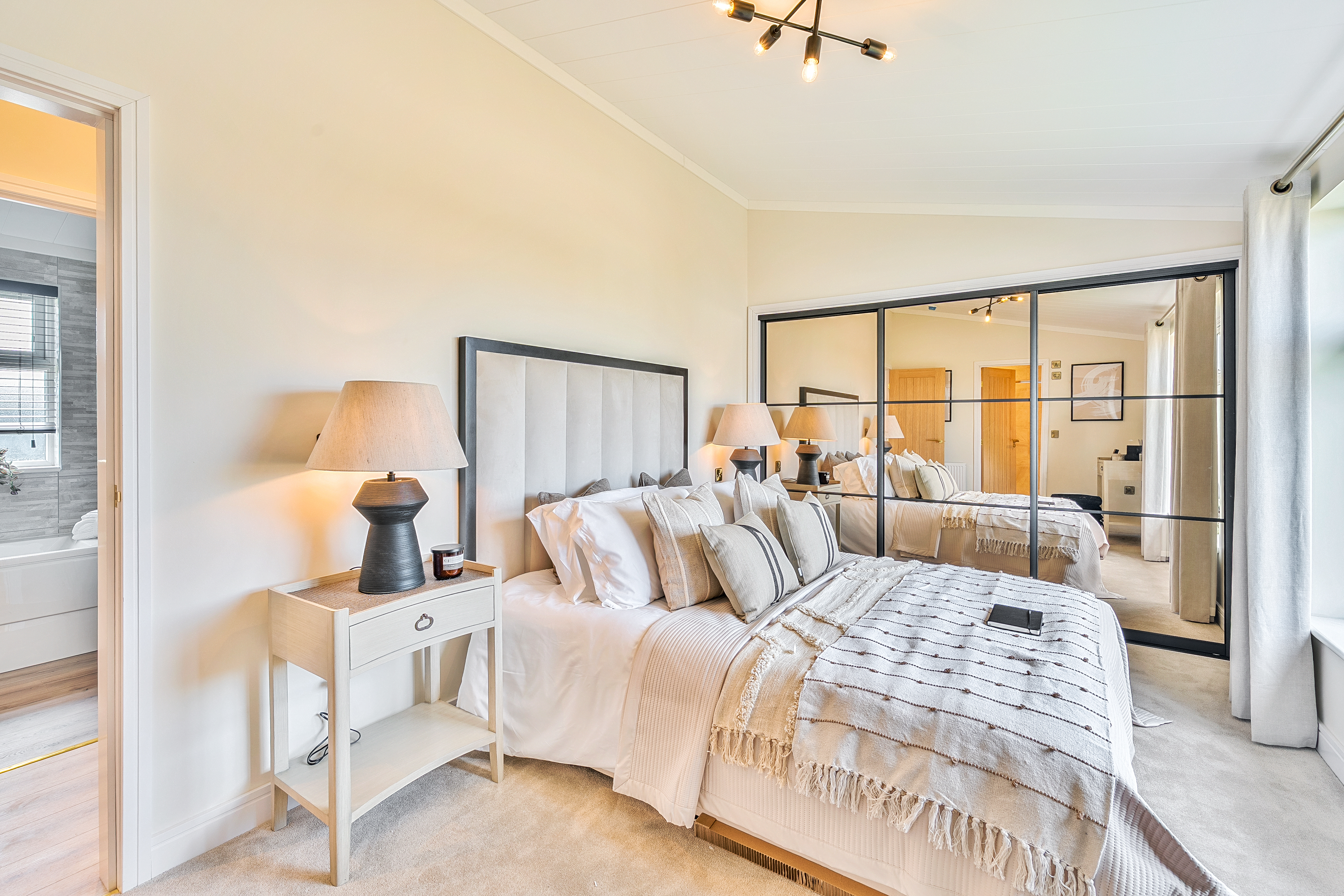
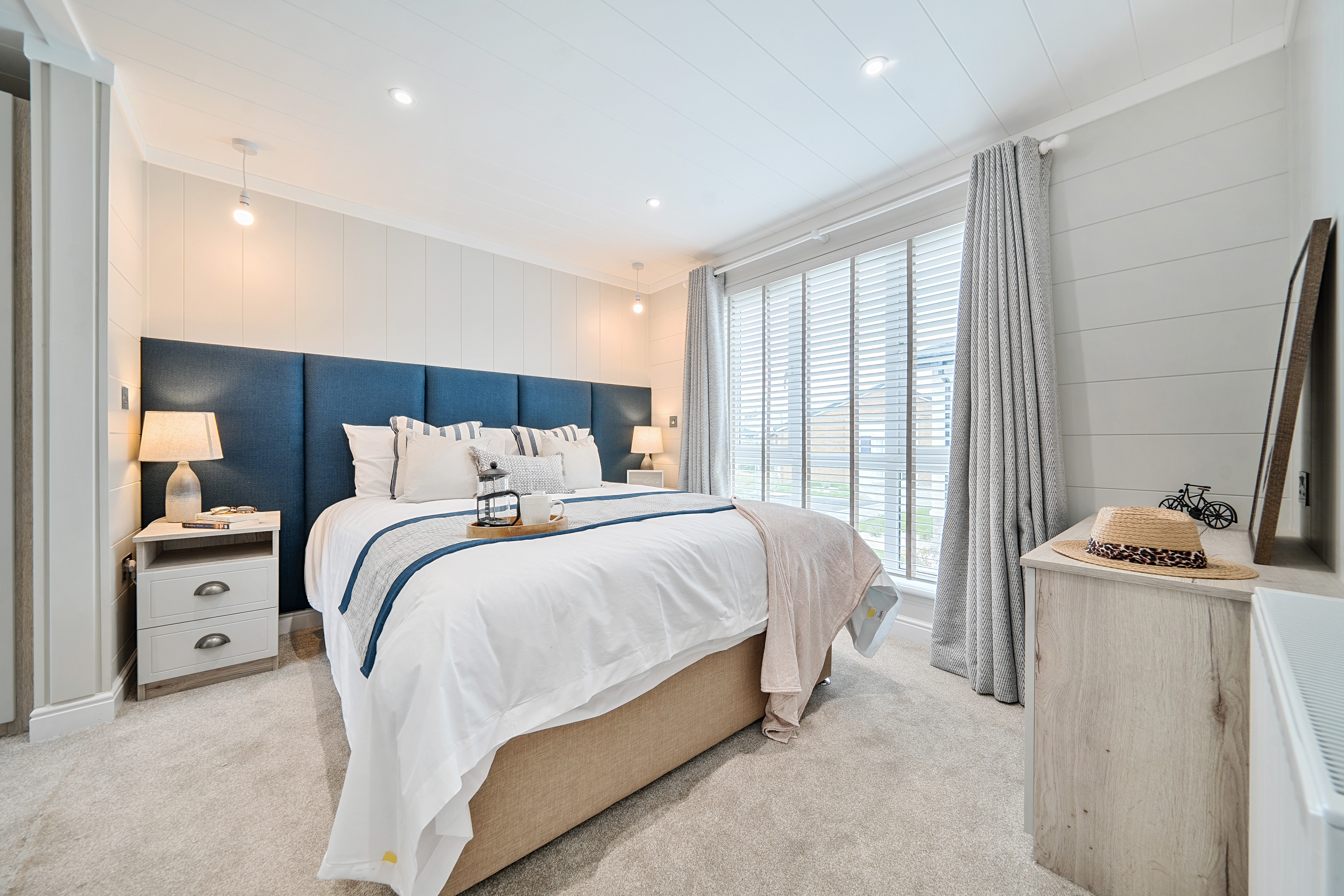
Modern bungalow bedrooms, particularly in purpose-built park bungalow communities like those from Regency Living and similar providers, tend to have these considerations built in from the start. Single-storey living removes the stairs issue entirely. Wide doorways, level thresholds and open-plan layouts create clear paths through the home at night. Insulation standards in homes built to BS3632:2023 mean more stable overnight temperatures, and modern ventilation systems handle airflow without needing to crack a window in February.
That said, a two-storey home can absolutely be adapted. The changes outlined in this article are all manageable without a major renovation. But for anyone furnishing a new single-storey home, the advantage of having a bedroom designed around these principles from day one is a genuine head start.


Our Partners